Mid-Century Modern
Look and Feel
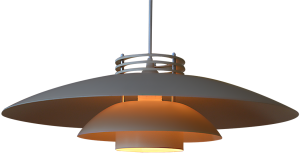
Just how do you know when you are looking at, let’s say a room in a building or house, if its interiors are of the tenor associated with Mid-Century Modern (MCM)? For some it is just “I know it when I see it”, which is anecdotal, at best. But there are some strong clues. Let’s examine them.
Color and tone are your best first hand clues. Strong accent colors with subdued walls are a good start. That in itself would suggest more of a modern style, but not necessarily mid century. Many times there is also a suggestion of warmth, either in materials or a main color. Natural occurring colors, especially natural wood colors are a signal to this era.
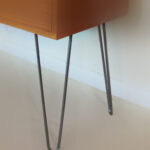
Iconic mid century modern Hairpin Legs created by Henry P. Glass in 1941
From a furniture standpoint one of the signatures of the MCM are wooden pieces with either tapered or hairpin legs. Tapered legs share a huge influence in Scandinavian furniture, and it is more than a coincidence that this look is also seen in MCM. Both the Scandinavian and MCM styles were developing just after World War II. Designers were looking for alternative materials and a new and fresh look after the war. Soldiers returning home needed inexpensive materials for their homes. Both MCM and Scandinavian lean toward the clean, simple, and inexpensive vibe. Ray and Charles Eames, along with Harry Bertoia and Arne Jacobsen designed furniture to meet this flowering need.
And don’t forget those organic kidney bean and teardrop shapes that helped to further refine the look and feel of the era. Think The Jetsons (just for chuckles).

Mid Century Modern
Look and Feel
So just how do you know when you are looking at, let’s say a room in a building or house, if its interiors are of the tenor associated with Mid-Century Modern (MCM)? For some it is just “I know it when I see it”, which is anecdotal, at best. But there are some strong clues. Let’s examine them.
Color and tone are your best first hand clues. Strong accent colors with subdued walls are a good start. That in itself would suggest more of a modern style, but not necessarily mid century. Many times there is also a suggestion of warmth, either in materials or a main color. Natural occurring colors, especially natural wood colors are a signal to this era.
From a furniture standpoint one of the signatures of the MCM are wooden pieces with either tapered or hairpin legs. Tapered legs share a huge influence in Scandinavian furniture, and it is more than a coincidence that this look is also seen in MCM. Both the Scandinavian and MCM styles were developing just after World War II. Designers were looking for alternative materials and a new and fresh look after the war. Soldiers returning home needed inexpensive materials for their homes. Both MCM and Scandinavian lean toward the clean, simple, and inexpensive vibe. Ray and Charles Eames, along with Harry Bertoia and Arne Jacobsen designed furniture to meet this flowering need.
And don’t forget those organic kidney bean and teardrop shapes that helped to further refine the look and feel of the era. Think The Jetsons (just for chuckles).